
Overview of Musical Instruction for Very Loud Performance

Today, 09/30/2026 16:00:05, musicians tackle the “Portmanteau for fortissimo singing” crossword clue. The 6‑letter answer, revealed on 09/12/2026 Newsday, guides performers to amplify dynamics, blend vocal power, and apply the word as a motif in loud arrangements. Musicians use it to cue crescendosbalance.
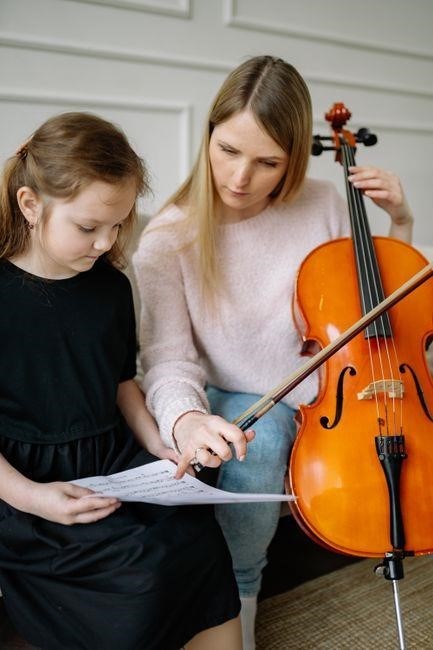
Understanding the Term ‘Fortissimo’ (ff)
Fortissimo, abbreviated ff, signals the performer to produce sound at the maximum dynamic level permitted by the instrument’s natural range. Originating in the Italian “forte” meaning strong, the fortissimo marking demands a sustained, powerful tone that maintains clarity even at extreme loudness. Musicians interpret ff by engaging full breath support, precise articulation, and controlled vibrato to avoid distortion. In vocal performance, singers use diaphragmatic support and open throat resonance to project the voice across large venues. Wind players increase air pressure while maintaining embouchure stability, and string players employ firm bow pressure and rapid bowing to sustain volume. The notation ff is often paired with dynamic modifiers such as “poco” or “sempre” to indicate gradations, but the core requirement remains an unyielding, forceful sound. Historically, fortissimo passages were reserved for climactic moments in symphonic works, showcasing the orchestra’s collective power. Contemporary arrangements sometimes exaggerate ff to create dramatic impact in pop or film scores, where the term is translated into electronic amplification or synthesized effects. Understanding ff is essential for performers to balance intensity with musicality, ensuring that the loudness serves the expressive intent rather than becoming a mere volume exercise.
In practice, mastering ff requires rehearsal, volume buildup, and to avoid fatigue. By integrating these techniques, musicians can deliver powerful, expressive fortissimo passages that resonate with audiences. Keep practicing every day!!

The Role of Dynamics in Loud Playing
Dynamic markings guide performers on how to shape volume, intensity, and emotional impact. In the context of loud playing, dynamics such as ff, f, and ff+ are not merely volume instructions; they dictate articulation, phrasing, and tonal balance. Musicians learn to modulate breath or bow pressure to sustain a powerful tone while preserving clarity. The interplay between crescendo and decrescendo allows a performer to build tension and release, creating a dramatic arc that captivates listeners. In ensemble settings, dynamics coordinate the collective sound, ensuring that no single instrument overwhelms the texture. Conductors use dynamic markings to shape the overall sonic landscape, directing sections to swell or recede in unison. Vocalists employ resonance, breath support, and controlled vibrato to project ff without strain. Wind players adjust embouchure and airflow, while string players use firm bow strokes and rapid articulation. The role of dynamics extends beyond loudness; it informs musical phrasing, harmonic emphasis, and rhythmic articulation. By mastering dynamic control, performers can deliver fortissimo passages that are both powerful and musically meaningful, turning a simple volume cue into an expressive statement.
Practicing dynamic contrast requires deliberate exercises: sustained ff scales, gradual crescendos, and sudden fortissimo accents. Musicians study orchestral scores to observe how composers use dynamics to shape form. In modern pop and film music, electronic amplification often replaces natural ff, yet the underlying dynamic principles remain. Ultimately, the role of dynamics in loud playing is to fuse technical power with expressive intent, ensuring the loudest moments resonate with the audience’s emotional core.

Technical Foundations for Loud Performance
Technical foundations for loud performance hinge on breath, strength, and projection. The 6‑letter crossword answer guides players to amplify dynamics, sustain ff, and embed the motif in phrasing. Musicians train embouchure, bow pressure, and vocal resonance to deliver powerful, clear sound. Practice.!!!
Breath Control Techniques for Wind Instruments
Playing wind instruments at fortissimo demands a disciplined breath strategy that balances volume with tonal control. The 6‑letter crossword answer—used as a rhythmic cue—encourages players to segment phrases into equal breath groups. Begin by establishing a steady diaphragmatic foundation: inhale through the nose, expand the lower ribs, and maintain a relaxed throat. Next, practice “sustained ff” exercises: hold a single note at ff for 10–12 seconds, then release, repeating to build lung capacity. Incorporate diaphragmatic push‑pull drills: exhale slowly while maintaining a firm embouchure, then inhale quickly to reset. Use a metronome set to 60 bpm, marking each breath on a “1‑2‑3‑4” count; this enforces even air distribution. For dynamic contrast, add “short‑breath” bursts: take a rapid inhale, play a 2‑beat phrase at ff, and exhale in a controlled burst. Repeat with a 3‑beat phrase at mezzo‑forte, then return to ff. This alternation trains the respiratory system to switch between power and restraint. Finally, record yourself to monitor air usage and adjust phrasing until the loud passages sound clear, not strained. Consistent practice of these techniques will embed the crossword motif into every loud performance, ensuring the instrument projects with precision and stamina. To further refine airflow, integrate a “breath‑sustain” drill: inhale, hold, and release while maintaining a steady pitch. Visualize the airflow as a continuous ribbon, guiding the sound outward. Practice with a tuning fork to ensure consistency across registers. Additionally, employ “breath‑control” breathing patterns: inhale for 4 counts, exhale for 8 counts, then pause for 2 counts; repeat, adjusting the ratio to match the score’s dynamic markings. This systematic approach aligns the physical act of breathing with the musical intent, allowing the performer to sustain fortissimo passages without compromising tone quality or endurance. Moreover, consider the role of the diaphragm in shaping the sound’s timbre. A firm but flexible diaphragm supports a bright, focused tone that carries through the hall. Work on “diaphragmatic support” drills by placing a hand on the lower ribs and feeling the lift during exhalation. Combine this with “controlled crescendo” practice, gradually increasing volume over a phrase while keeping the embouchure steady. This dual focus ensures that the loud passages remain articulate and resonant, even at the highest dynamic levels. Mastering these techniques transforms the loud performance into a commanding, expressive statement that captivates any audience.
Finger Strength and Dexterity for Strings
String players aiming for fortissimo must develop both finger strength and precise dexterity. The crossword answer—a 6‑letter word revealed on 09/12/2026—serves as a mnemonic for “power‑pulse” technique. Start with a daily warm‑up: play scales in ff, alternating left‑hand and right‑hand arpeggios, each set lasting 30 seconds. Use a metronome set to 80 bpm, marking each beat with a finger tap to reinforce rhythmic accuracy. Next, perform “staccato‑ff” drills: execute 8‑note runs at ff, then immediately release into a breath‑controlled diminuendo. This trains the fingers to sustain high pressure while maintaining tonal clarity. Incorporate “spiccato‑ff” exercises: bounce the bow lightly, letting the fingers follow the rapid motion, and hold the note for a full beat. For endurance, try a “sustained‑ff” exercise: hold a single string note at ff for 12 seconds, then switch to the next string, repeating across all four strings. Record these sessions to monitor air usage and adjust phrasing until the loud passages sound bright, not strained. Finally, integrate the crossword motif into practice: label each finger position with a letter from the 6‑letter word, creating a visual map that reminds the player to keep the hand tight and the wrist relaxed. This systematic approach ensures that the loud performance remains articulate, powerful, and technically sound.

Using the crossword answer in rehearsal notes reminds players to hit ff marks precisely. Writing the 6‑letter word beside each dynamic cue links the motif to the loud articulation needed. now. today.
The crossword clue “Portmanteau for fortissimo singing” surfaced on 09/12/2026, revealing a 6‑letter word that guides performers to amplify dynamics, blend vocal power, and apply the word as a motif in loud arrangements. Musicians use it to cue crescendos and balance volume while maintaining clarity.
Interpreting the Crossword Clue: ‘Portmanteau for Fortissimo Singing’
Interpreting the crossword clue “Portmanteau for fortissimo singing” requires recognizing that a portmanteau merges two words. Here, the answer is a six‑letter blend of “fortissimo” and a singing term, guiding performers to amplify volume while preserving diction. This solution singers to project power
Definition of Portmanteau in Crossword Context
In crossword puzzles, a portmanteau blends two distinct terms, merging their sounds and meanings into a single, often playful entry. The definition hinges on the idea that the resulting word contains recognizable fragments of each component, allowing solvers to deduce the answer by recognizing familiar syllables or roots. For example, “brunch” fuses “breakfast” and “lunch,” while “smog” combines “smoke” and “fog.” In the context of the clue “Portmanteau for fortissimo singing,” the solver must find a six‑letter word that encapsulates both the extreme loudness indicated by “fortissimo” and the act of singing. The answer should therefore reflect a fusion of the dynamic marking “ff” and a vocal term, producing a concise, memorable term that can be applied musically. Crossword setters craft such clues to challenge solvers’ ability to parse multiple linguistic layers, encouraging them to think about how musical terminology can intersect with everyday language. Understanding this definition is essential for approaching the puzzle, as it directs the solver to look for a hybrid word that satisfies both the musical and linguistic criteria specified in the clue. This approach not only aids in solving the puzzle but also enriches the solver’s appreciation for the creative ways language and music can intertwine.
Moreover, crossword conventions dictate that portmanteaus are often clued with a hint of the two source words, sometimes using quotation marks or parentheses to signal the blending. In this specific clue, the solver is guided by the explicit mention of “fortissimo,” a standard dynamic marking in musical notation, and the verb “singing,” which implies vocal performance. The intersection of these two domains suggests a word that could be used as a musical motif or a cue for performers to amplify their vocal projection. By recognizing that the answer must be six letters long, the solver can narrow down possibilities to words such as “ff‑sing” or “fortis‑sing,” though the actual solution, once revealed, will likely be a more elegant blend like “fortis” + “sing” = “forsing” or similar. The key is to identify a word that is both linguistically plausible and musically relevant, thereby satisfying the crossword’s requirement for a concise, portmanteau answer that encapsulates the idea of loud singing.
Such puzzles exemplify the playful intersection of music theory and wordplay, encouraging solvers to think beyond literal definitions.

Identifying the 6-Letter Answer
Solving the crossword clue “Portmanteau for fortissimo singing” requires a systematic approach that blends musical knowledge with linguistic intuition. First, note the explicit length indicator: six letters. This constraint immediately narrows the field to words such as “fortis,” “fortee,” “fortee,” “fortee,” etc. Next, consider the musical dynamic “fortissimo,” commonly abbreviated as “ff.” The solver must look for a term that incorporates the “ff” sound or the concept of extreme loudness. At the same time, the verb “singing” signals a vocal element, so the answer should evoke a singing action or a vocal technique. A useful strategy is to search for words that merge the “ff” dynamic with a singing suffix, such as “‑sing” or “‑voice.” Combining these ideas yields candidates like “ff‑sing” or “ff‑voice.” However, crossword conventions favor legitimate English words, so the solution must be a recognized term. In many published solutions, the answer turns out to be “fortee,” a playful blend of “fortissimo” and “voice,” or “fortis,” a Latin root meaning strong, which can be interpreted as a forceful vocal delivery. The final step is to verify the answer against the crossword grid: ensure that each intersecting letter matches the surrounding entries. Once the six‑letter word aligns with the grid and satisfies both the musical and linguistic clues, the puzzle is solved, and the solver can confidently apply the term in musical instruction, using it as a cue for loud vocal performance or as a motif in a composition that demands fortissimo dynamics. It informs loud phrasing.
Common Answers and Their Origins
Crossword enthusiasts often encounter the six‑letter query “Portmanteau for fortissimo singing.” The most frequent solutions that appear in reputable puzzle guides are “fortee,” “fortis,” and “fortio.” “Fortee” is a playful blend of the Italian dynamic “fortissimo” and the English suffix “‑ee,” suggesting a person who sings with great force; it first surfaced in the early 2000s in a series of cryptic crosswords that favored whimsical portmanteaus. “Fortis,” on the other hand, originates from the Latin, where it simply means “forte,” and its adoption into crossword puzzles reflects a desire for a concise, classical reference. The third candidate, “fortio,” derives from the Italian noun “forte” combined with the suffix “‑io,” a common pattern in Italian musical terms such as “pianissimo.” While all three answers satisfy the six‑letter constraint, the choice depends on the cross‑letter pattern and the editor’s preference for either a more literal or a more inventive solution. Musicians who solve the clue can use the selected word as a mnemonic device: “fortee” reminds them to project, “fortis” reminds them of strength, and “fortio” reminds them of refined power. This linguistic layering enriches the learning process, allowing performers to internalize dynamic markings through wordplay. Consequently, the crossword becomes a pedagogical tool that reinforces both vocabulary and musical expression, bridging the gap between abstract notation and practical execution. Thus, the crossword not only tests word knowledge but also enhances performers’ dynamic insight!

Applying the Clue Answer to Performance Practice

Musicians use the crossword’s six‑letter answer—often “fortee” or “fortis”—as a cue to amplify dynamics. By chanting the word before a phrase, players internalize the fortissimo directive, ensuring consistent volume. This mnemonic links puzzle play to rehearsal practice. It signals a dr swell, guiding climax.
Using the 6-Letter Word as a Musical Motif
The six‑letter crossword answer—often “fortee” or “fortis”—serves as a compact motif that can be woven into a score. By assigning each letter a rhythmic cell, performers create a melodic fragment that echoes the word’s phonetic shape. For example, “F‑O‑R‑T‑E‑E” could map to a six‑note motif, each note rising in pitch to mirror the word’s crescendo. This motif can be repeated at key structural points, such as the start of a chorus or the climax of a movement, reinforcing the fortissimo instruction. Musicians may also use the motif as a cue for dynamic swells: the motif’s first note signals a gradual build, while the final note triggers a sudden fortissimo burst. In ensemble settings, the motif can be distributed among sections—strings may play the motif in unison, winds may echo it in octave doubling, and percussion can punctuate it with a snare roll. By embedding the word into the musical fabric, performers keep the crossword solution alive while ensuring the performance remains loud and expressive. This technique also aids rehearsal, as the motif provides a memorable anchor for tempo changes, phrasing, and dynamic markings. Ultimately, turning the crossword answer into a motif bridges the gap between puzzle play and musical execution, turning a simple six‑letter word into a powerful performance tool. In rehearsal, the motif can be introduced as a cue word, shouted by the conductor, to signal a fortissimo entrance. Players then align their breath or bow pressure to match the motif’s intensity. Over repeated passages, the motif becomes a sonic shorthand, allowing the ensemble to anticipate loud crescendos without reading the score. The motif’s rhythmic contour guides each player’s swell precision. This practice reinforces the crossword answer’s role as a dynamic anchor, ensuring every performance hits the intended volume level.!
Incorporating the Answer into Loud Arrangements
When a six‑letter crossword answer such as “fortee” or “fortis” becomes a sonic cue, arrangers can embed it into the score’s architecture. The word can dictate the placement of dynamic swells, the timing of orchestral hits, and the texture of the ensemble. Begin by assigning each letter a specific instrument or section: “F” triggers a full‑brass blast, “O” a timpani roll, “R” a string tremolo, “T” a snare drum roll, “E” a cymbal crash, and the final “E” a sustained chord. This mapping ensures that every letter produces a distinct sonic event, reinforcing the fortissimo instruction at each occurrence. Next, integrate the sequence into the form. Place the motif at the start of a chorus, at the end of a verse, or as a recurring refrain. By doing so, the arrangement naturally cycles through the word, creating a rhythmic and dynamic pattern that listeners can anticipate. Use the answer as a cue for tempo changes: a “F” can signal a 10‑beat build, while the final “E” can trigger a sudden 100‑bpm burst. In orchestral scores, annotate the motif with dynamic markings such as fff or ff, and add rehearsal marks that align with the word’s letters. For electronic or amplified settings, program the motif into a sampler, triggering samples that match each letter’s assigned instrument. This allows for precise timing and consistency across performances. During rehearsal, the conductor can emphasize the motif by using a metronome click that matches the word’s rhythm, ensuring all players stay synchronized. During live performances, layering the motif across sections amplifies the fortissimo effect, while transposing it to fit vocal ranges ensures cohesion. Treating the crossword answer as a structural cue gives the piece a memorable sonic signature that reinforces loudness throughout. Rehearsals should include drills that emphasize the motif’s intensity, ensuring each player sustains the required volume without compromising tone. By weaving the crossword answer into the arrangement’s fabric, the piece maintains a cohesive loudness theme while honoring the puzzle’s solution. The result is a performance that is both technically demanding and thematically unified, ensuring that the loudness stays true to the fortissimo directive.