
Understanding Mixed Numbers and Improper Fractions
Fractions represent parts of a whole, and understanding their different forms—mixed numbers and improper fractions—is crucial for mathematical fluency․
These concepts are foundational for more advanced operations, especially when working with worksheets focusing on PDF practice․
What are Mixed Numbers?
Mixed numbers represent a whole number combined with a proper fraction, signifying quantities greater than one․ For instance, 2½ (or 2 1/2) is a mixed number, comprising the whole number ‘2’ and the fractional part ‘½’․ They’re incredibly useful for expressing real-world quantities that aren’t whole units – like having two and a half apples․
Essentially, a mixed number visually demonstrates a complete unit plus a portion of another․ Understanding this composition is key when converting them․ Many worksheets, often available as PDF downloads, begin with identifying and understanding mixed numbers before progressing to conversions․ These resources help students visualize the relationship between the whole number and the fraction, building a solid foundation for more complex operations․ Mastering mixed numbers is a stepping stone to confidently tackling improper fractions․
What are Improper Fractions?
Improper fractions are fractions where the numerator (the top number) is greater than or equal to the denominator (the bottom number)․ This means the fraction represents a quantity equal to or greater than one whole unit․ Examples include 7/4 or 5/5․ While seemingly unusual, improper fractions are essential in mathematical operations and represent a valid way to express fractional amounts․
They often arise when converting from mixed numbers, and understanding their value is crucial for performing calculations․ Many educational resources, including worksheets in PDF format, focus on recognizing and simplifying improper fractions․ These resources often present visual models to help students grasp the concept․ Converting between mixed numbers and improper fractions is a fundamental skill, and mastering it requires practice with various examples found in these readily available learning materials․

The Conversion Process: Mixed Numbers to Improper Fractions
Converting requires a systematic approach, often reinforced through practice worksheets, frequently available as PDF downloads, to solidify understanding of the process․
Step 1: Multiply the Whole Number by the Denominator
The initial step in transforming a mixed number into an improper fraction involves multiplying the whole number component by the denominator of the fractional part․ This crucial calculation forms the foundation for the subsequent steps․ For instance, if you have the mixed number 2 ½, you would multiply 2 (the whole number) by 2 (the denominator)․ This yields 4․ This multiplication essentially determines how many portions, equivalent to the denominator, are contained within the whole number part․
Many mixed numbers to improper fractions worksheet PDF resources emphasize this step, often providing numerous examples to practice․ Mastering this multiplication is key, as errors here will cascade through the rest of the conversion process․ Consistent practice with these worksheets, readily available as PDF documents, will build confidence and accuracy in performing this fundamental operation․ Remember, this step establishes the new numerator’s base value․
Step 2: Add the Numerator to the Result
Following the multiplication of the whole number and denominator, the next essential step is to add the original numerator of the mixed number to the product obtained in Step 1․ Continuing with our example of 2 ½, we previously calculated 4 (2 multiplied by 2)․ Now, we add the numerator, 1, to this result: 4 + 1 = 5․ This addition combines the equivalent portions from the whole number with the existing fractional part, preparing us to express the entire quantity as a single improper fraction․
Numerous mixed numbers to improper fractions worksheet PDF materials highlight this addition as a critical point for potential errors․ Careful attention to detail is vital․ Practicing with these worksheets, often downloadable as PDF files, reinforces this skill․ This sum represents the new numerator of the improper fraction, bringing us closer to the final conversion․
Step 3: Keep the Original Denominator

After successfully adding the numerator to the product of the whole number and denominator, the final step in converting a mixed number to an improper fraction is remarkably simple: retain the original denominator․ In our ongoing example, starting with 2 ½, we arrived at a numerator of 5 after completing the previous steps․ Therefore, the improper fraction equivalent is 5/2․ The denominator, 2, remains unchanged throughout the conversion process․
Many mixed numbers to improper fractions worksheet PDF resources emphasize this point, as it’s a common mistake for learners to alter the denominator․ Consistent practice with these worksheets, readily available as PDF downloads, solidifies this understanding․ Maintaining the original denominator ensures the fraction represents equivalent portions of the whole, accurately reflecting the initial mixed number․

Worksheet Practice: Converting Mixed Numbers
Consistent practice with mixed numbers to improper fractions worksheet PDF resources is essential for mastering this skill, building confidence and accuracy in fraction conversions․
Basic Conversion Examples
Let’s begin with straightforward examples to solidify the conversion process using a mixed numbers to improper fractions worksheet PDF․ Consider 2 1/2․ First, multiply the whole number (2) by the denominator (2), resulting in 4․ Then, add the numerator (1) to this result: 4 + 1 = 5․ Finally, keep the original denominator (2), giving us the improper fraction 5/2․
Another example: 1 1/4․ Multiply 1 by 4, which equals 4․ Add the numerator 1: 4 + 1 = 5․ Maintain the denominator 4, resulting in 5/4․ These initial examples, readily available on many worksheets, demonstrate the core steps․
Practicing with simple numbers like these, often found in PDF formats from sites like K5 Learning, builds a strong foundation․ Remember, the key is consistent application of the multiplication and addition steps before retaining the original denominator․ These exercises prepare you for more complex conversions․
Converting with Larger Numbers
As you progress with a mixed numbers to improper fractions worksheet PDF, you’ll encounter larger numbers requiring careful calculation․ For instance, let’s convert 5 3/4․ Multiply the whole number (5) by the denominator (4), yielding 20․ Add the numerator (3) to the result: 20 + 3 = 23․ Keep the denominator (4), resulting in the improper fraction 23/4․
Consider another example: 8 1/3․ Multiply 8 by 3, obtaining 24․ Add the numerator 1: 24 + 1 = 25․ The denominator remains 3, giving us 25/3․ These examples, commonly found on worksheets, emphasize precision․
When dealing with larger numbers, double-checking your multiplication and addition is crucial․ Many PDF resources offer answer keys for self-assessment․ Consistent practice with these more complex conversions, available online, builds confidence and accuracy in applying the core principles․
Practice with Different Denominators
A valuable component of a mixed numbers to improper fractions worksheet PDF involves practice with varying denominators․ Consider converting 2 1/5․ Multiply 2 by 5, resulting in 10․ Add the numerator 1: 10 + 1 = 11․ The improper fraction is 11/5․ Now, let’s try 3 2/7․ Multiply 3 by 7, getting 21․ Add 2: 21 + 2 = 23․ The result is 23/7;
These examples, frequently found in worksheets, demonstrate that the process remains consistent regardless of the denominator․ The key is accurate multiplication and addition․ Utilizing PDF resources with diverse problems strengthens your understanding․
Consistent practice with different denominators builds fluency and reduces errors․ Online platforms often provide instant feedback, aiding in identifying areas for improvement․ Mastering this skill is essential for more complex fraction operations, and readily available worksheets facilitate this learning process․

Converting Improper Fractions to Mixed Numbers
Transforming improper fractions into mixed numbers involves division with remainders, a skill reinforced through practice using a mixed numbers to improper fractions worksheet PDF․
Step 1: Divide the Numerator by the Denominator
The initial step in converting an improper fraction to a mixed number is performing division․ Specifically, you divide the numerator (the top number) by the denominator (the bottom number) of the fraction․ This division process is fundamental and forms the basis for determining the whole number component of the mixed number․ For example, if you’re working with a fraction like 7/3, you would divide 7 by 3․
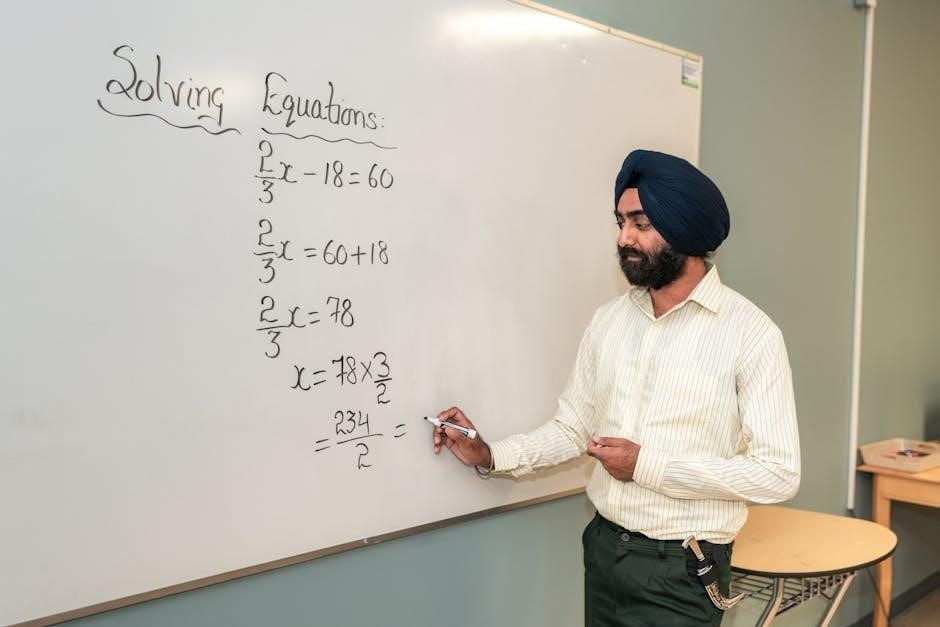
This division will yield two results: a quotient and a remainder․ The quotient represents the whole number part of your mixed number․ The remainder, as the name suggests, is what’s left over after the division and will become the new numerator in the fractional part․ Practicing this step with a mixed numbers to improper fractions worksheet PDF will solidify your understanding․ Remember to focus on accurate division to ensure correct conversions, as errors here propagate through the entire process․
Step 2: Determine the Whole Number
Following the division of the numerator by the denominator, identifying the whole number is straightforward․ The quotient obtained from the division directly represents the whole number portion of the mixed number․ This is the integer part that sits alongside the fraction․ For instance, continuing with the example of 7/3, the division results in a quotient of 2․ Therefore, the whole number in our mixed number will be 2․
This whole number signifies how many complete units are contained within the improper fraction․ It’s crucial to accurately record this quotient, as it’s a key component of the final mixed number representation․ Utilizing a mixed numbers to improper fractions worksheet PDF provides ample opportunity to practice this step and build confidence․ Remember, the quotient isn’t an approximation; it’s the precise result of the division, forming the foundation for the mixed number․
Step 3: Find the Remainder for the New Numerator
After determining the whole number through division, the remainder becomes the new numerator of the fractional part․ Continuing with the example of 7 divided by 3, we established a quotient of 2․ However, the division doesn’t end there; there’s a remainder of 1․ This remainder, 1, now serves as the numerator in our mixed number’s fractional component․
The denominator remains unchanged from the original improper fraction․ Therefore, with a remainder of 1 and the original denominator of 3, the fractional part becomes 1/3․ Practicing with a mixed numbers to improper fractions worksheet PDF reinforces this step․ Understanding that the remainder represents the leftover portion after extracting whole units is vital․ This ensures accurate conversion and solidifies comprehension of fraction relationships․

Resources for Printable Worksheets (PDF)
Numerous online platforms offer free, printable mixed numbers to improper fractions worksheet PDF resources, like K5 Learning, aiding practice and skill development․
K5 Learning Worksheets
K5 Learning provides a comprehensive collection of Grade 5 Fractions Worksheets specifically designed to help students master the conversion between mixed numbers and improper fractions․ Their resources are readily available as PDF downloads, making them easily accessible for classroom use or home practice․
The worksheets cover a range of difficulty levels, starting with basic conversion examples and progressing to more challenging problems involving larger numbers and different denominators․ A key feature is the clear, concise layout, which minimizes distractions and allows students to focus on the core concepts․
These worksheets often include visual aids and step-by-step instructions, catering to diverse learning styles․ Furthermore, K5 Learning offers answer keys, enabling self-assessment and independent learning․ The focus is on building a solid foundation in fraction manipulation, preparing students for more advanced mathematical topics․ The PDF format ensures compatibility across various devices and operating systems, making it a versatile resource for educators and parents alike․
Educational Websites Offering PDF Downloads
Beyond K5 Learning, numerous educational websites offer free, printable worksheets for practicing the conversion of mixed numbers to improper fractions in PDF format․ Many sites cater to different grade levels and learning preferences, providing a diverse range of exercises․

Commonly, these resources include worksheets focusing on basic conversions, problems with varying denominators, and more complex scenarios designed to reinforce understanding․ Websites often categorize their materials by skill level, allowing educators and parents to easily find appropriate practice exercises․

Look for sites offering answer keys for self-checking and independent learning․ Some platforms also provide interactive quizzes and online tutorials to supplement the PDF worksheets; These supplementary materials can enhance the learning experience and provide additional support for students struggling with the concepts․ Remember to preview the content to ensure it aligns with your curriculum and learning objectives before downloading and using the PDF resources․

Common Mistakes to Avoid
Students often forget multiplication steps or incorrectly add the numerator and result when converting․ Careful attention and practice with PDF worksheets are key!
Forgetting to Multiply
A prevalent error when converting mixed numbers to improper fractions involves omitting the crucial initial multiplication step․ Remember, the whole number component must be multiplied by the denominator of the fractional part․ This is the foundation for correctly determining the equivalent improper fraction․ Students often rush this stage, leading to an inaccurate numerator․
For example, with 2 ½, failing to multiply 2 by 2 results in an incorrect calculation․ Utilizing worksheets, particularly those available as PDF downloads from resources like K5 Learning, provides repetitive practice to solidify this step․ Consistent practice reinforces the importance of this multiplication, minimizing errors․ Reviewing completed worksheets helps identify and correct this common oversight, building confidence and accuracy in fraction conversions․ Focusing on this foundational step is vital for success․
Incorrectly Adding Numerator and Result
Another frequent mistake arises after multiplying the whole number by the denominator, but before forming the improper fraction․ Students sometimes incorrectly add the original numerator to the result of the multiplication, instead of adding it to that result․ This leads to a flawed numerator in the final improper fraction․
Consider 3 ¼: correctly, you’d multiply 3 x 4 = 12, then add the numerator 1, resulting in 13․ Incorrectly adding 1 to 3 yields 4, a significant error․ Practicing with mixed numbers to improper fractions worksheet pdf resources helps internalize the correct order of operations․ Regularly reviewing completed worksheets and identifying these errors is key․ Consistent practice, especially with varied examples, reinforces the proper addition sequence, improving accuracy and preventing this common mistake․